 ENG
ENG
 INA
INA
Improving Research Quality, UNUD Agroecotechnology Study Program Discusses Strategy for Winning 2026 Non-Tax State Revenue Grants (PNBP)
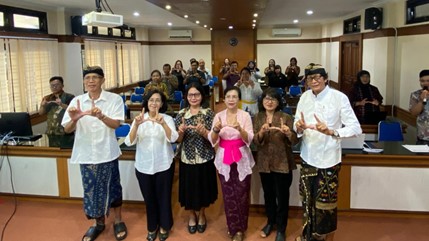
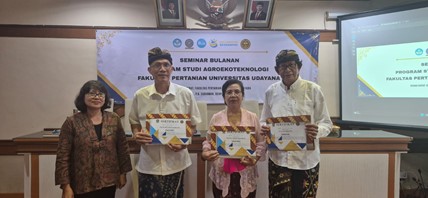
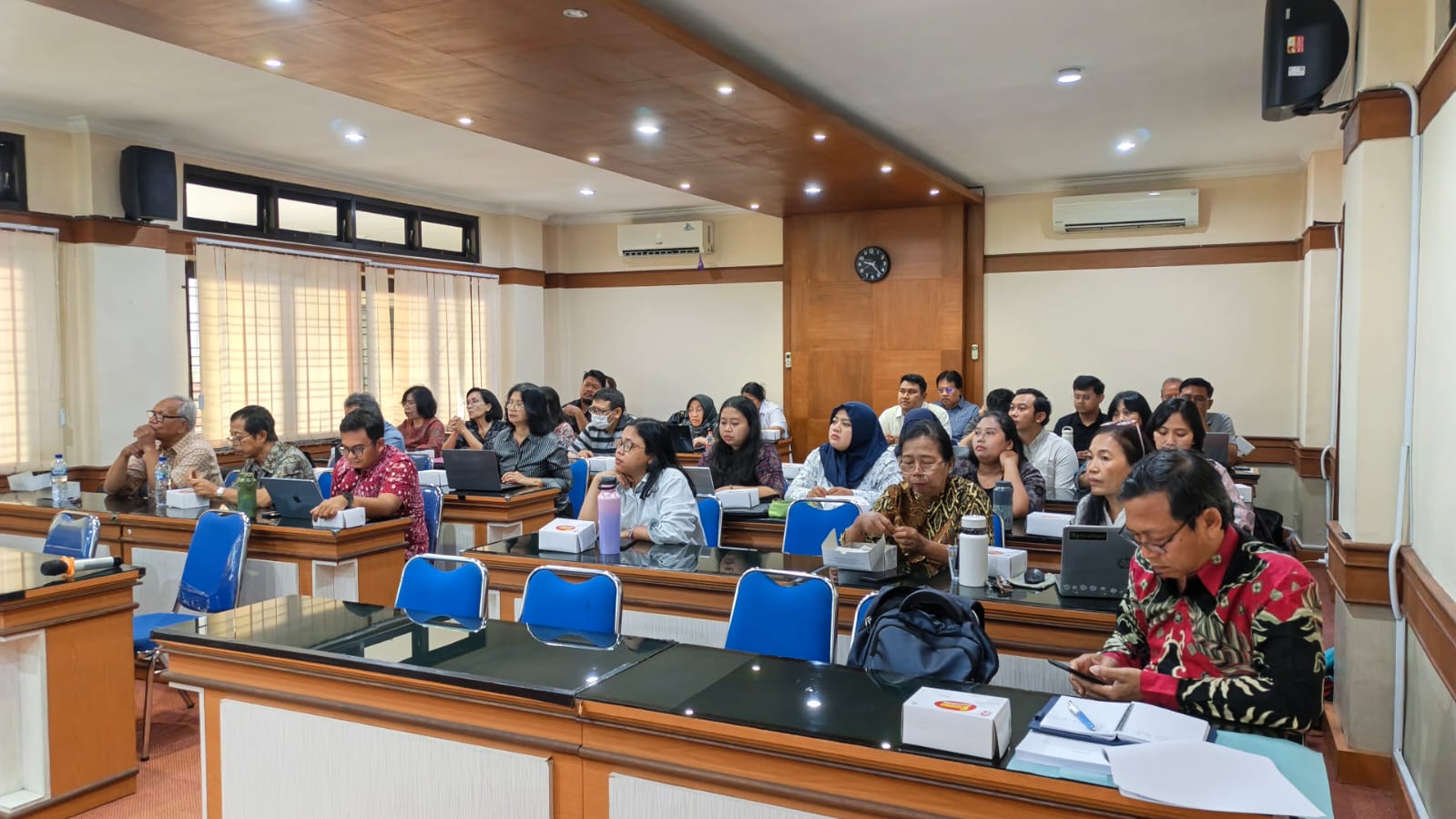
DENPASAR, February 19, 2026 – The Agroecotechnology Study Program, Faculty of Agriculture, Udayana University (UNUD), successfully held a monthly seminar titled "Strategies for Winning 2026 Non-Tax State Revenue Grants: Research & Community Service" on Thursday (February 19). The event, held in the Senate Meeting Room on the Sudirman Campus, was attended by dozens of lecturers enthusiastically exploring the internal grant competition mechanism. Through this event, the study program is committed to continuously improving lecturers' competitiveness in securing research funding for the advancement of the institution.
The first speaker was Prof. Dr. Drh. Prof. I Nyoman Suartha, M.Si., provided an in-depth overview of the 14 grant schemes managed by Udayana University in 2026. He emphasized that proposal selection is now increasingly competitive, emphasizing alignment with the university's vision and mission as well as tangible contributions to the Sustainable Development Goals (SDGs). Furthermore, active student involvement and the potential for international collaboration are crucial factors that will significantly influence the reviewers' assessments.
"Reviewers not only look at the quality of the substance, but also the extent to which the research supports UNUD's vision and mission and contributes to international rankings through collaboration with foreign partners," explained Prof. Suartha.
Complementing the presentation, Prof. Dr. Ir. Ni Made Trigunasih, M.P., shared effective proposal development techniques based on her track record of successfully securing various grants. She emphasized that every proposer must fully comply with the LPPM Guidelines, Edition XI, to avoid being disqualified from the initial administrative selection. Furthermore, consistency between the problem formulation, methods, outputs, and budget proposals must be clearly demonstrated from the summary section to ensure the project's feasibility. During the discussion session, consensus emerged on the importance of optimizing the role of the Head of the Scientific Group (KBK) as an advisor to young lecturers. This aims to ensure that lecturers' research remains aligned and aligned with the scientific roadmap established by the faculty. Furthermore, the university announced special incentives for articles published in Scopus journals Q1-Q4 as a form of support for achieving the university's Key Performance Indicators (KPI).
The seminar concluded with strong hopes that the quantity and quality of proposals from the Agroecotechnology Study Program will significantly increase during this year's funding period. The synergy between supportive university policies and lecturer creativity is expected to produce innovations that benefit the wider community. Through quality research, Udayana University remains committed to providing real solutions to various challenges in the global agricultural sector.
Gallery
FACULTY OF AGRICULTURE - UDAYANA UNIVERSITY