 ENG
ENG
 INA
INA
Cross-Program Collaboration at Udayana University Hosts Scientific Seminar on Fusarium and Plant Biotechnology
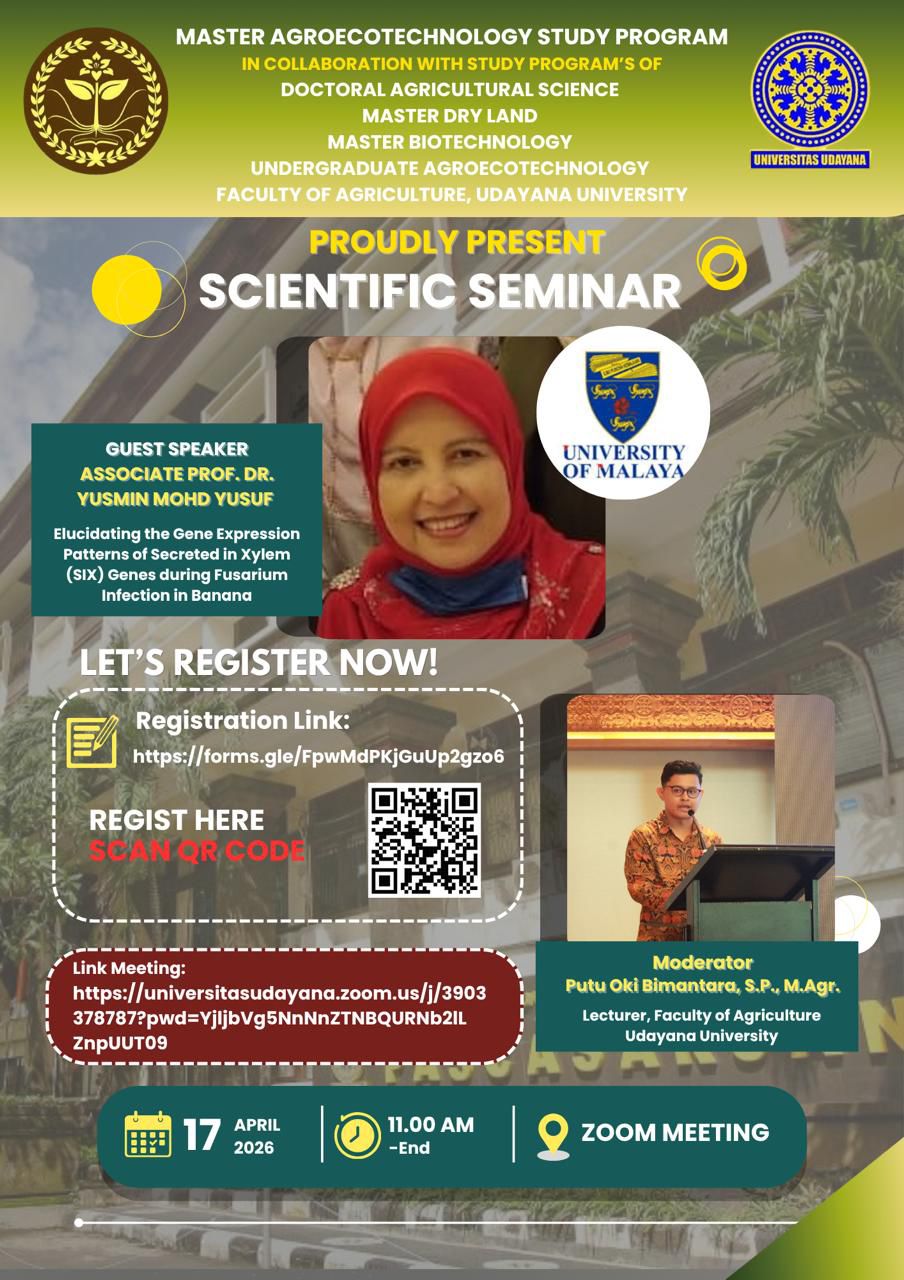
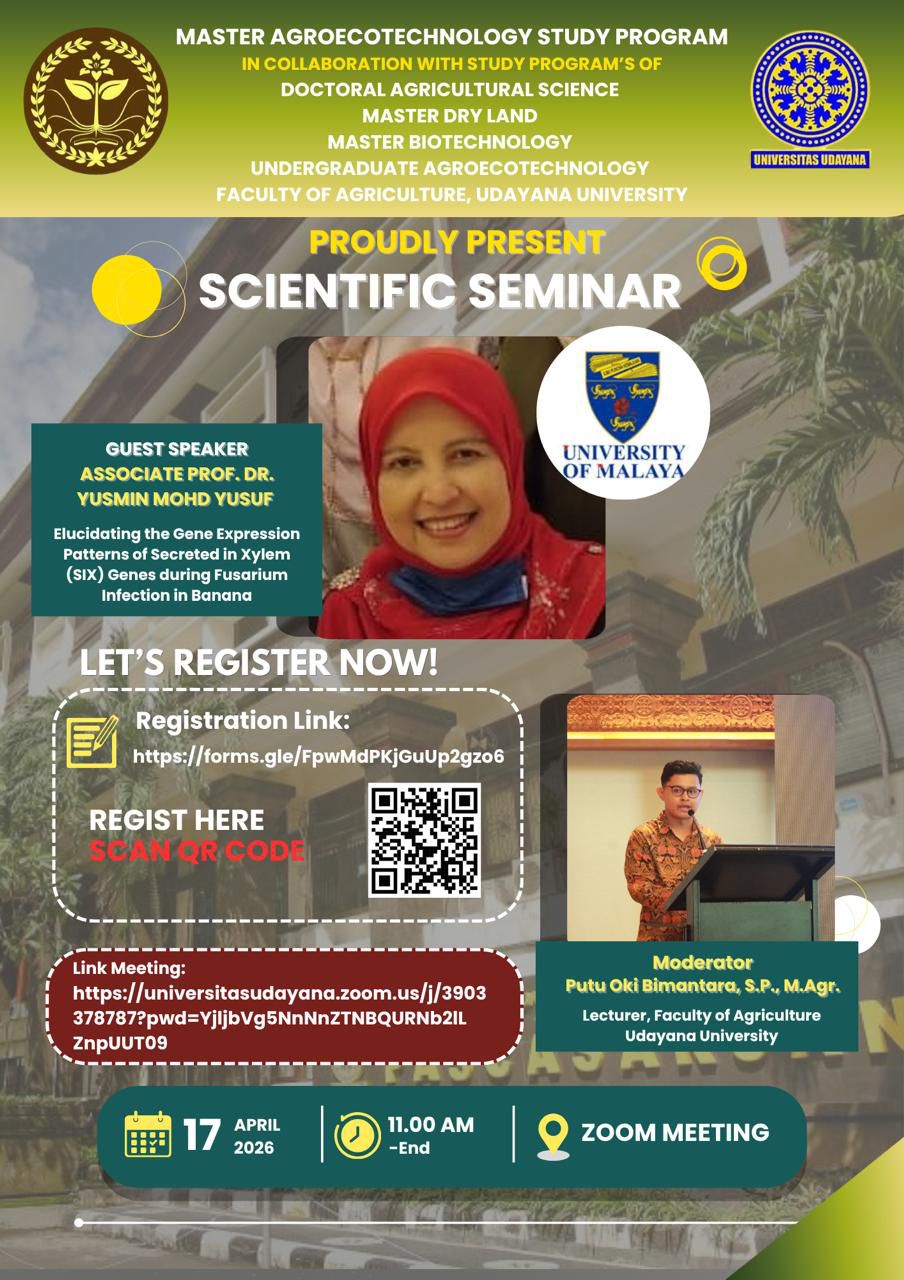
Denpasar – The Master Program in Agroecotechnology, Faculty of Agriculture, Udayana University, successfully organized a Scientific Seminar on Friday, April 17, 2026. This event was particularly significant as it was conducted through cross-program collaboration, involving the Doctoral Program in Agricultural Science, Master Program in Dryland Agriculture, Master Program in Biotechnology, and the Undergraduate Program in Agroecotechnology, Faculty of Agriculture, Udayana University.
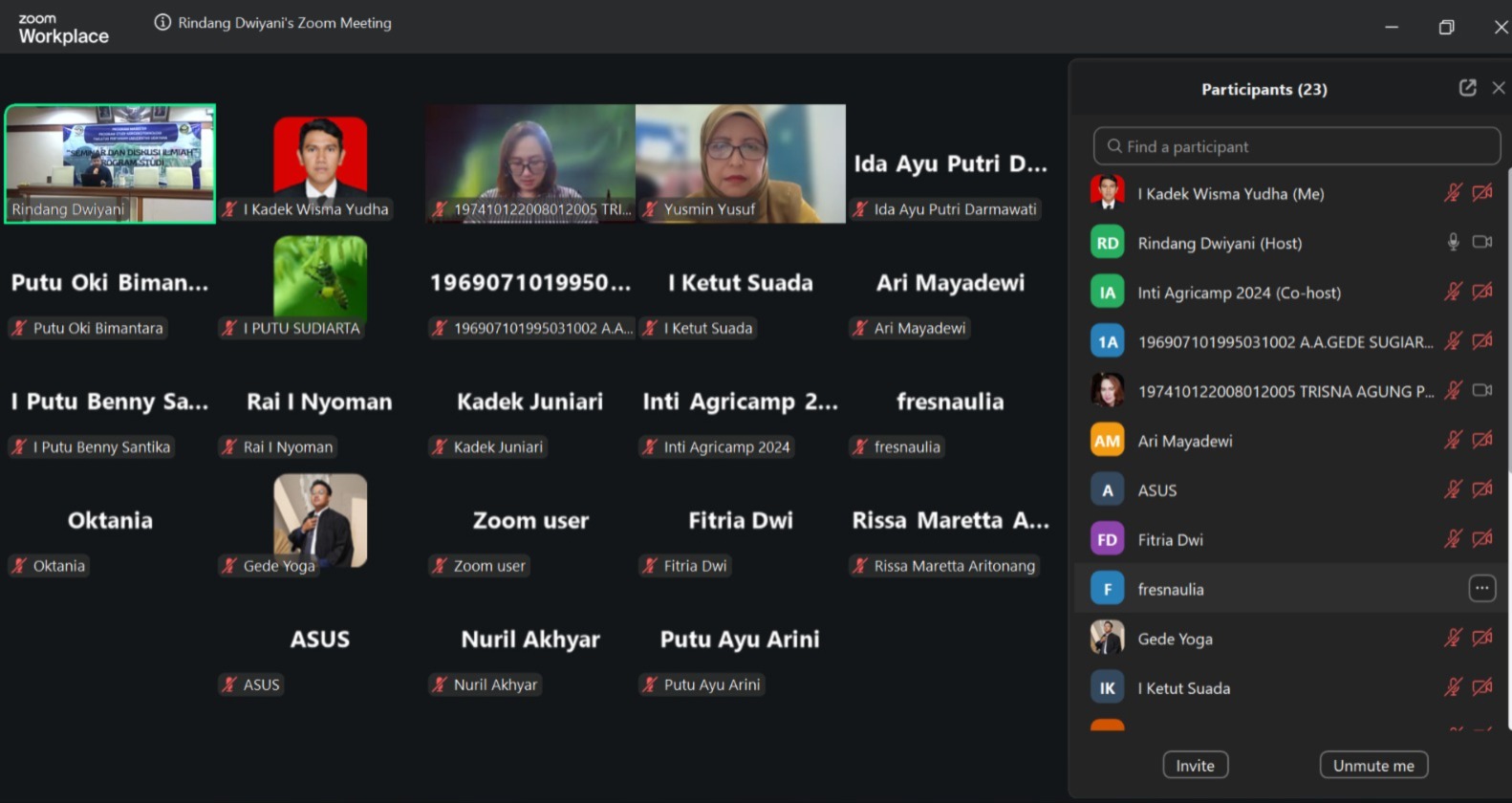
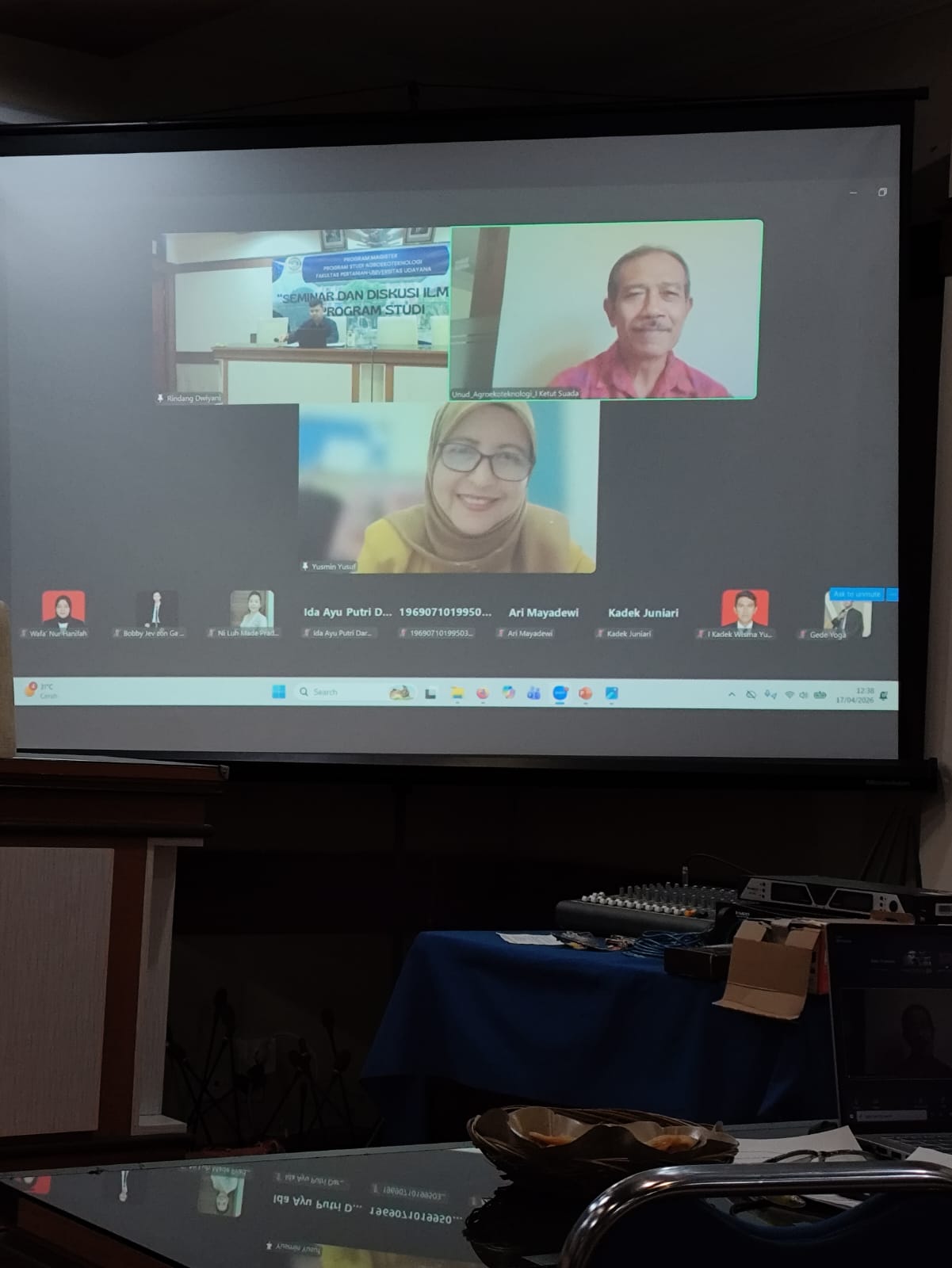
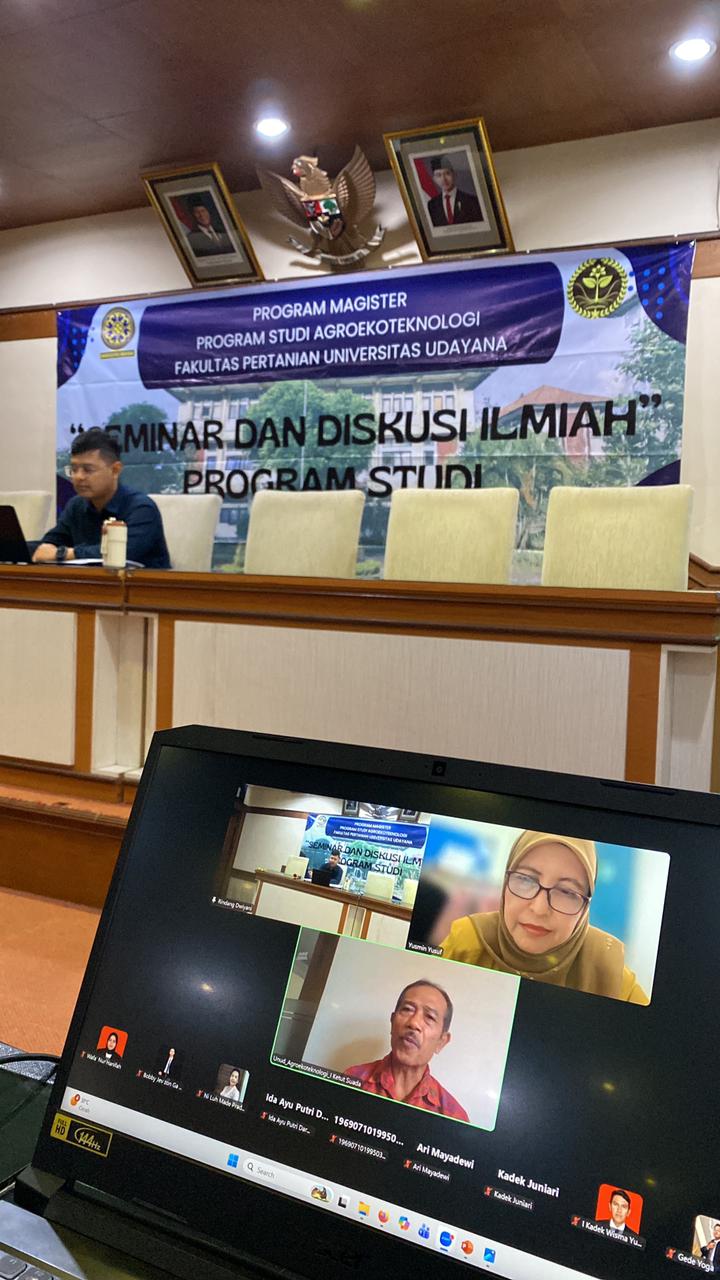
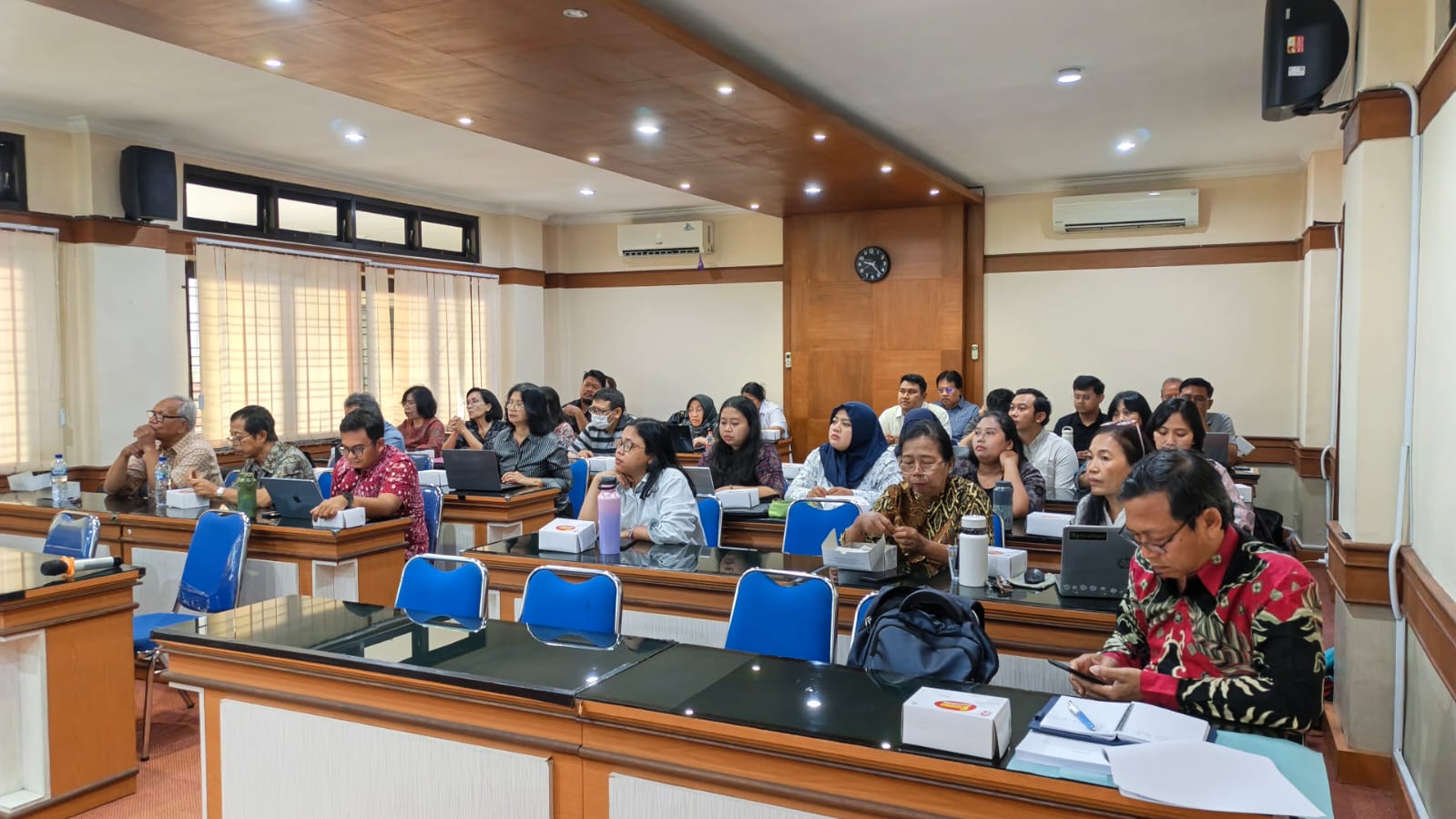
The seminar was held in a hybrid format at the Senate Room of the Agrocomplex Building and via Zoom Meeting, and was attended by lecturers, students, and participants from various academic levels. This activity reflects strong academic synergy among study programs in advancing agricultural science through research and innovation. The session was moderated by Putu Oki Bimantara, S.P., M.Agr.
The seminar featured two distinguished speakers, namely Associate Professor Dr. Yusmin Mohd-Yusuf from Universiti Malaya and Dr. Ida Ayu Putri Darmawati, S.P., M.Si. from Udayana University .
In her presentation, Dr. Yusmin Mohd-Yusuf provided a comprehensive explanation of Fusarium wilt disease in banana caused by Fusarium oxysporum. This disease represents a major threat to banana production systems, characterized by symptoms such as leaf yellowing and stem splitting. She further elaborated on the interaction between the pathogen and plant xylem tissues, which plays a critical role in the spread of infection within the plant .
Meanwhile, Dr. Ida Ayu Putri Darmawati presented her research on the induction of vegetative growth and flowering in orchids, particularly Phalaenopsis, through the application of plant growth regulators such as GA3, BAP, and liquid organic fertilizers. Her work highlights how plant physiological responses can be optimized through biotechnological approaches .
The seminar was highly interactive, featuring an engaging discussion session. One of the key topics raised was the difference in resistance between wild and cultivated banana varieties against Fusarium infection. It was explained that wild bananas tend to have more adaptive root systems, contributing to enhanced resistance to pathogens. In addition, discussions covered gene expression dynamics during infection and the challenges of detecting Fusarium disease without damaging plant tissues .
The discussion also addressed plant biotechnology aspects, particularly the issue of phenolic compounds in banana tissue culture. The speakers explained that this constraint can be mitigated through specific treatments, including chemical applications and periodic tissue cutting techniques to reduce inhibitory compound accumulation .
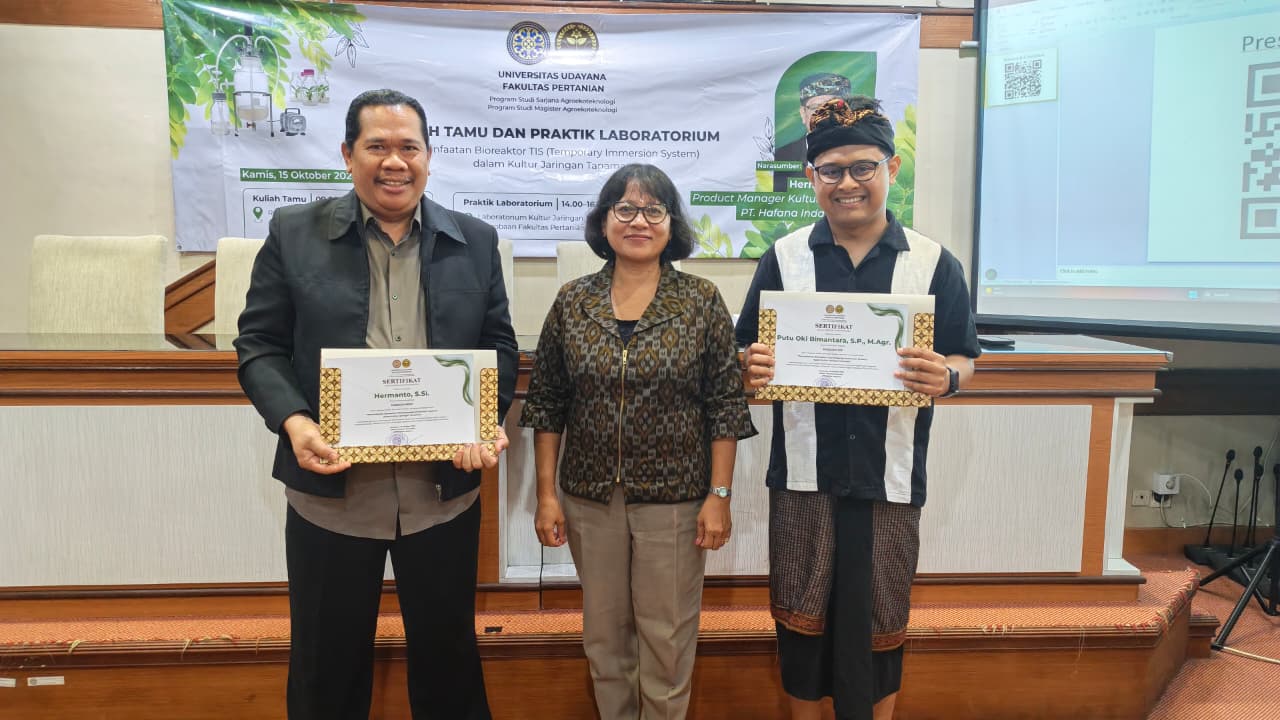
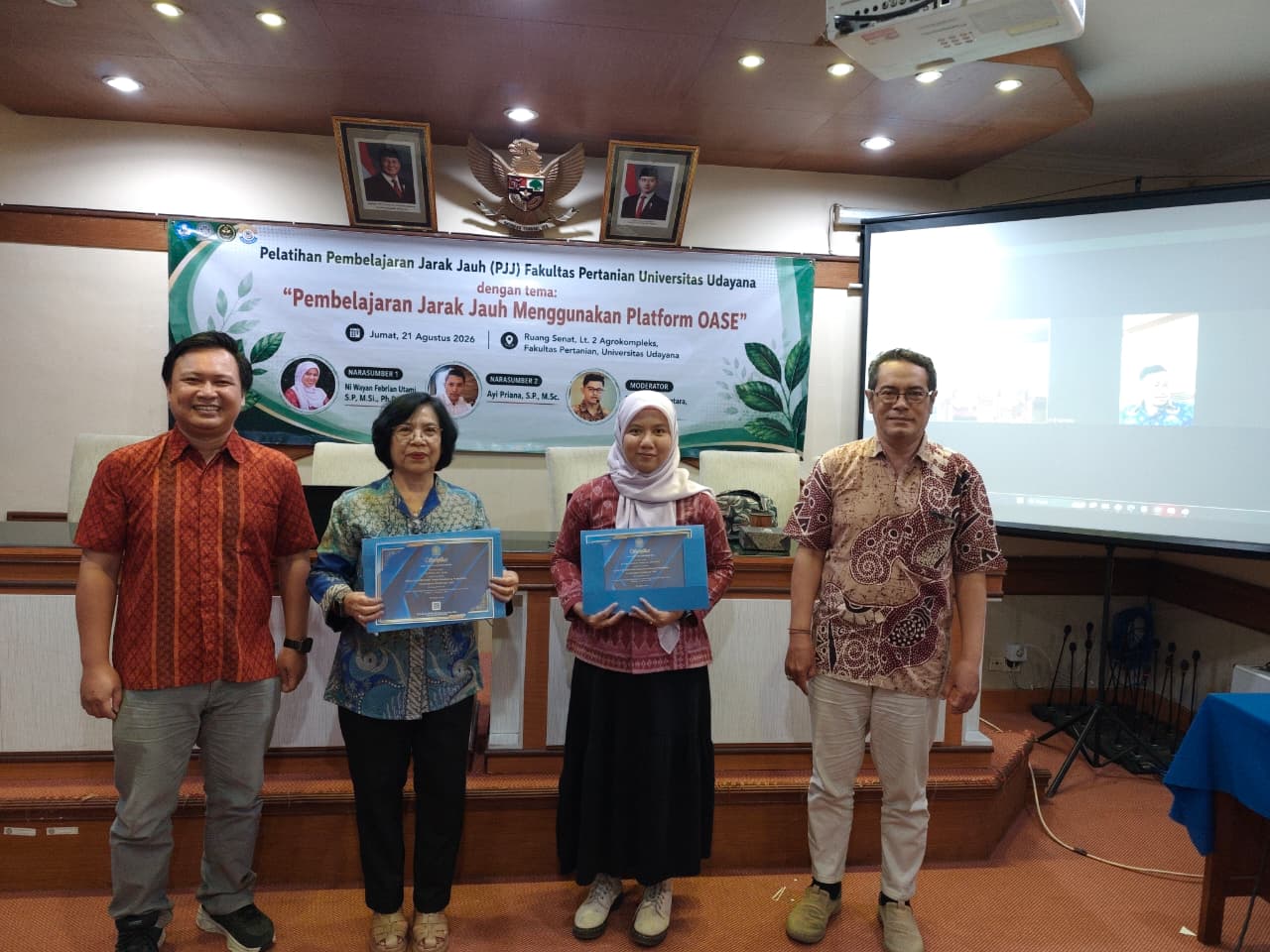
The seminar concluded with the presentation of certificates to the speakers as a token of appreciation for their scientific contributions. Through this collaborative activity, it is expected that stronger synergy among study programs will be fostered, promoting the advancement of knowledge and innovation in tropical agriculture, particularly in addressing plant diseases and developing agricultural biotechnology.
Gallery
FACULTY OF AGRICULTURE - UDAYANA UNIVERSITY